
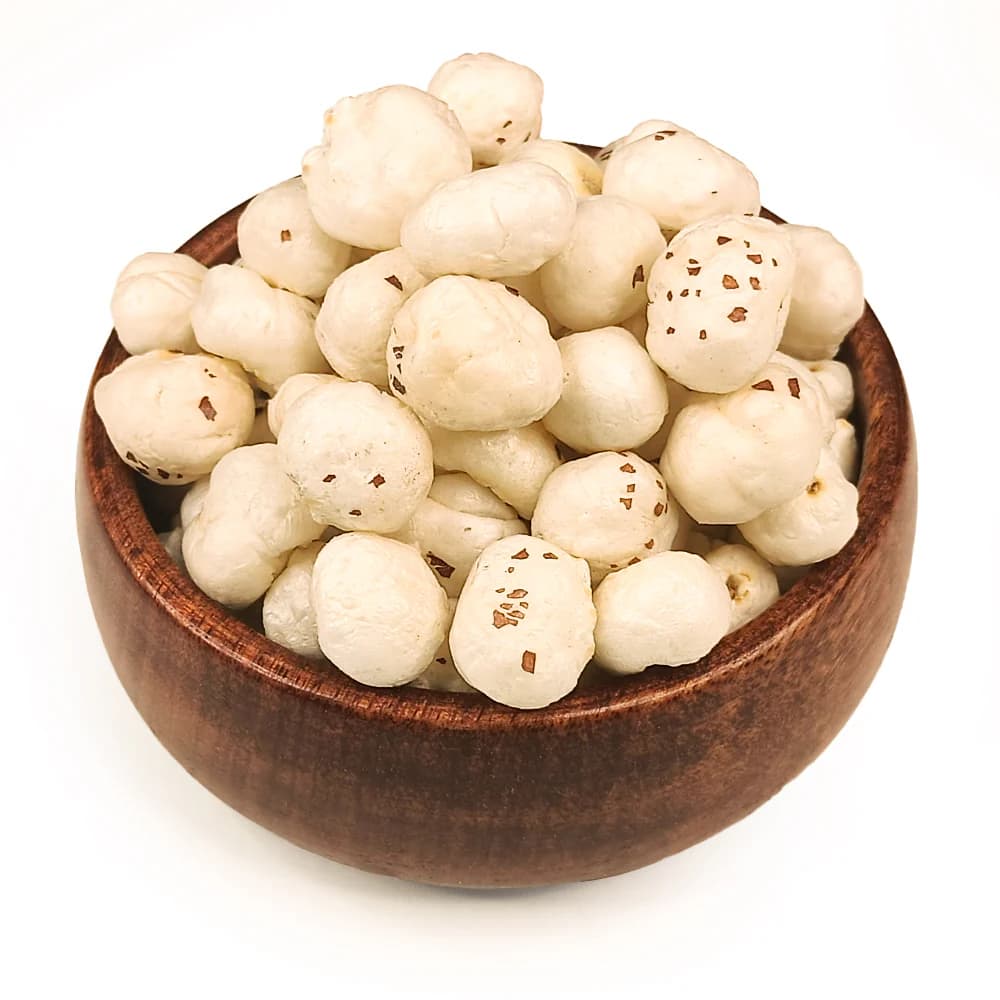
Premium GradeExport Quality
Makhana (Fox Nuts)
Premium graded lotus seeds with a light crunch and clean, neutral taste.
Price on enquiryView details
Sourcing2 min read
Two lots of makhana can look identical and behave completely differently. Most of that difference is decided in the pond, months before anyone opens a pack.
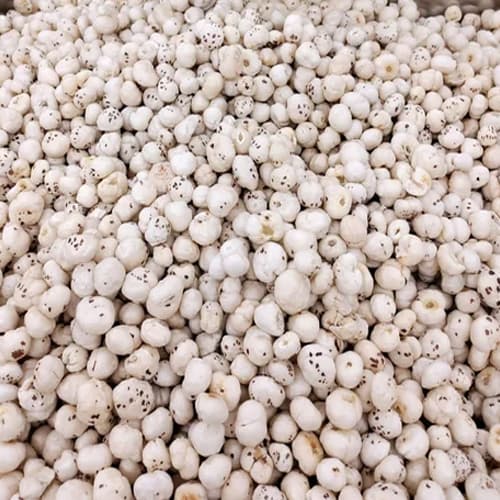
Makhana is grown in standing freshwater — ponds, oxbow lakes and low-lying fields that hold water through the year. Bihar's Mithilanchal belt, which includes Purbi Champaran, has more of that water than anywhere else in India, and it has had it for long enough that the farming knowledge has compounded across generations.
That matters more than it sounds. Makhana is not a crop you can standardise with inputs. The seed is harvested by hand from the pond bed, dried, roasted and popped — and every one of those steps is a judgement call made by someone who has done it before. Origin, in this product, is really a proxy for how many times the person handling it has done it correctly.
When buyers compare lots from different sourcing areas, four things separate them consistently:
None of these are exotic. They are simply the things that go wrong when seed is aggregated from the open market, mixed across harvest dates, and popped by whoever is available that week.
There is a meaningful difference between buying makhana and buying a specific lot of makhana. Open-market aggregation gets you volume quickly, but you lose the three variables that decide how a batch behaves: which pond it came from, when it was harvested, and how it was dried.
Working through established networks in Purbi Champaran means those three things stay attached to the lot. When a consignment behaves unexpectedly, we can trace it back rather than guess. When it behaves well, we can buy from the same source again. That is the entire mechanism — there is nothing more sophisticated to it.
It would be dishonest to suggest that Champaran origin alone makes a lot good. It does not. Poorly dried seed from the best pond in Bihar will still pop badly, and careless sorting will still leave grit in the pack.
What origin gives you is a better starting point and a shorter chain between the pond and the person accountable for the batch. Everything after that — drying, roasting, sorting, grading, moisture control — still has to be done properly, every time.
Mentioned in this article
Everything above describes how we actually work. Here is what it produces.
Premium graded lotus seeds with a light crunch and clean, neutral taste.
Keep reading
Buying Guides2 min read
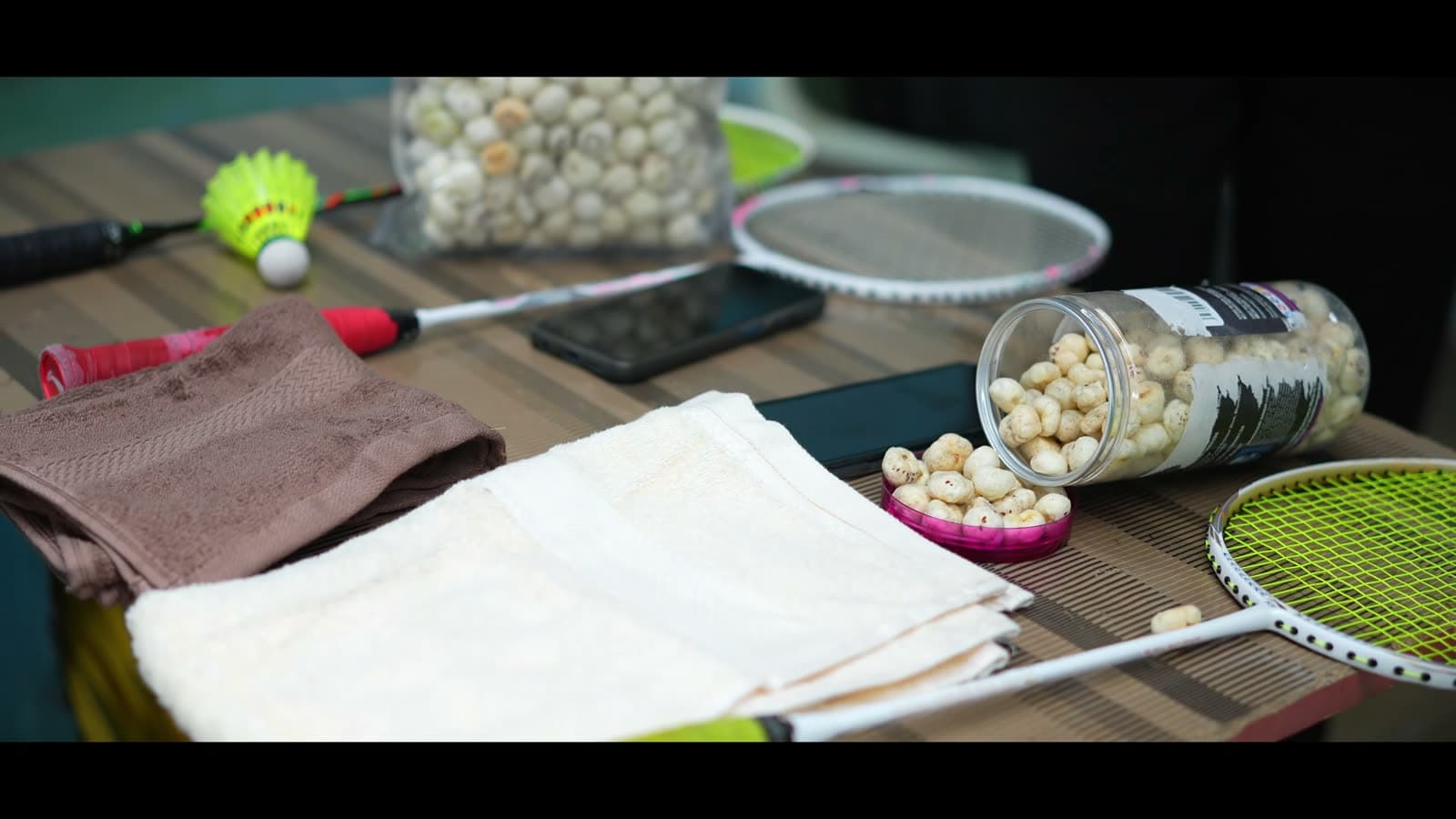
Most bulk makhana disputes are not about quality. They are about a specification that was never written down. Here is what to pin before you place an order.
Read article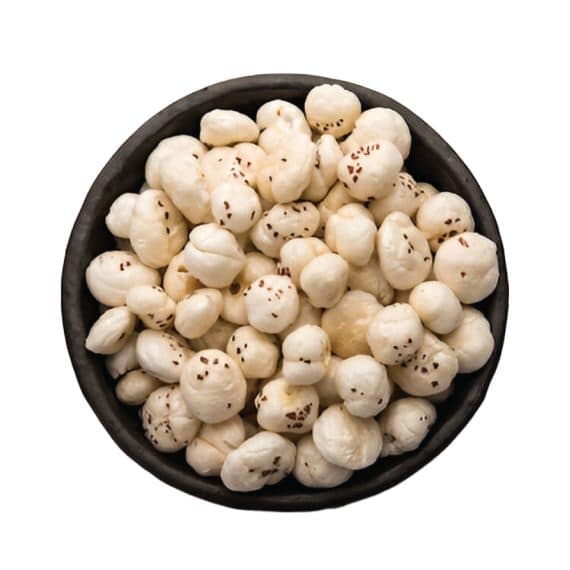
Quality2 min read
Makhana rarely spoils. It goes soft — and soft makhana is a rejected consignment. Almost every failure traces back to one variable.
Read article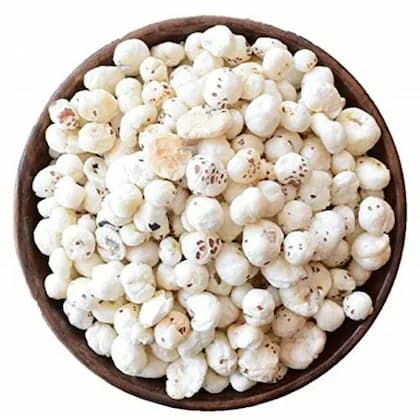
Nutrition2 min read
Makhana carries a lot of health claims. Most of them hold up, one or two are stretched, and a few matter far more to product formulators than to consumers.
Read articleGet in touch
Share your grade, quantity and destination. We will come back with pricing, packing options and lead time — usually within one working day.